
Color has long shaped the language of interior design. It defines mood, sets tone, and brings cohesion to a space. But today, designers are expanding the conversation.
Across residential interiors, hospitality environments, and commercial spaces, texture is becoming one of the most influential tools in modern interior design. Walls are no longer treated as flat backdrops. They are layered, dimensional, and expressive surfaces designed to be seen, felt, and experienced.
This shift is changing how designers approach materiality, atmosphere, and visual storytelling. With the rise of dimensional wallcoverings, texture is becoming a powerful way to bring depth, movement, and emotion into the built environment.
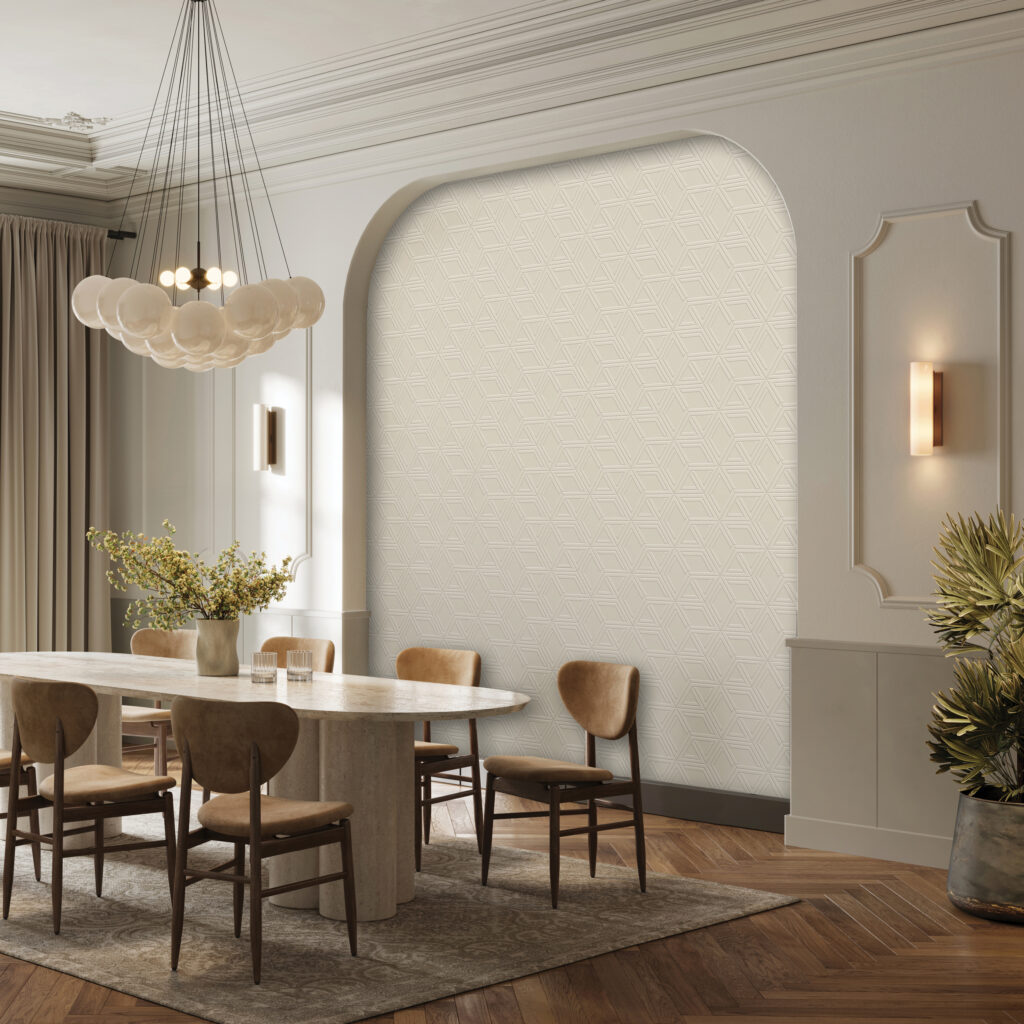
Why Texture Is Becoming a New Color Story in Interior Design
Interior design is moving away from overly polished, minimal spaces and toward environments that feel more tactile, layered, and human.
Designers are asking a more thoughtful question: How does this space feel, not just how does it look?
Texture plays a critical role in answering that question. While color creates visual tone, texture adds physical presence. It changes how light moves across a surface, how shadows appear throughout the day, and how a room feels from one moment to the next.
In modern interiors, textured wallcoverings can introduce:
- Depth, dimension, and materiality
- Movement across large surfaces
- Dynamic interaction with shadow and light
- A more immersive design experience
This is why search interest and design conversations continue to grow around phrases like dimensional wallcovering, textured wall design, 3D wallcoverings, and immersive interiors.
Texture gives a space another layer of expression. It allows a room to feel warmer, richer, and more connected to the people moving through it.
Dimensional Wallcoverings as a Modern Design Tool
Advancements in wallcovering technology are making it easier for designers to bring texture into a space with greater precision, consistency, and creative control.
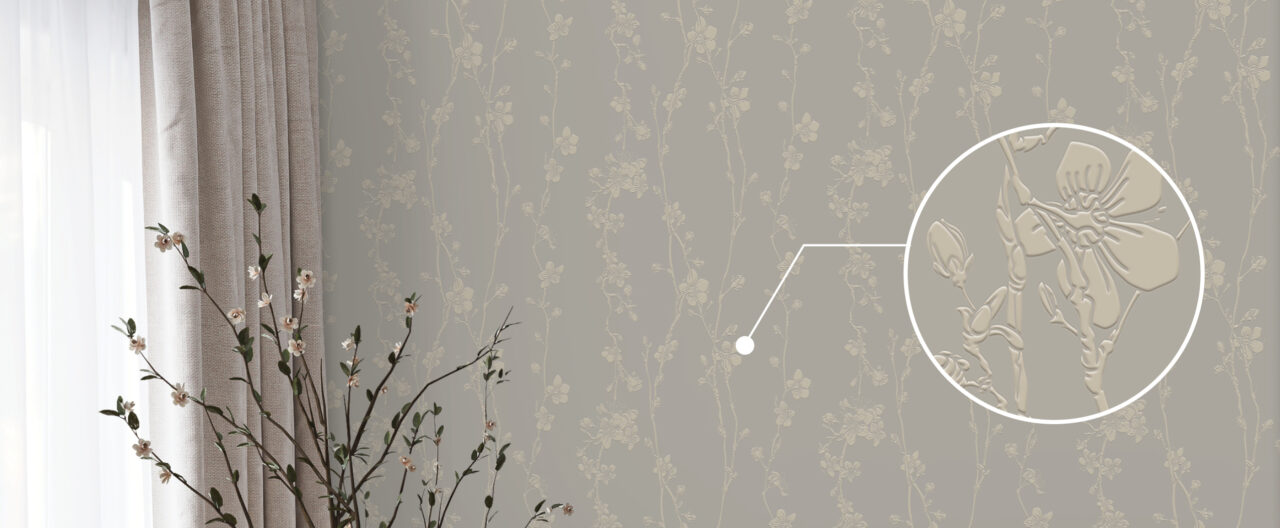
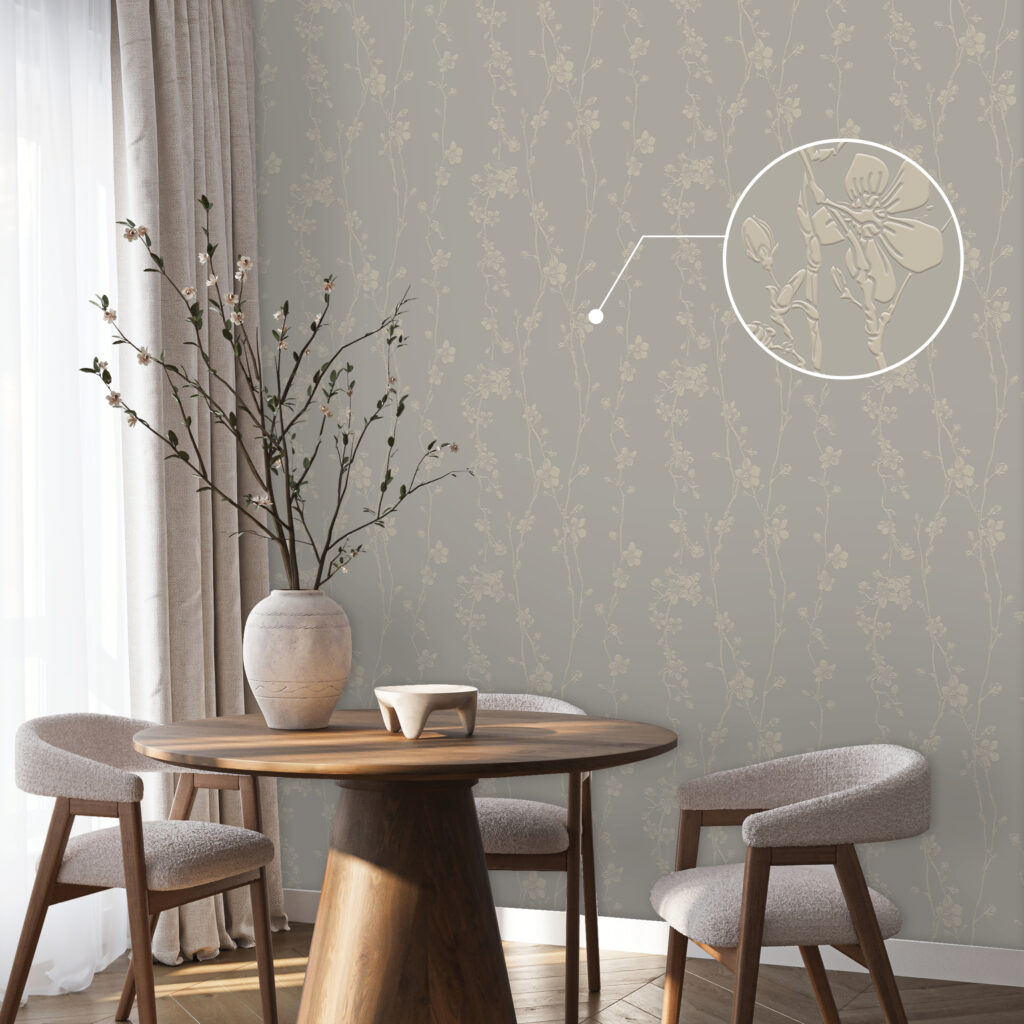
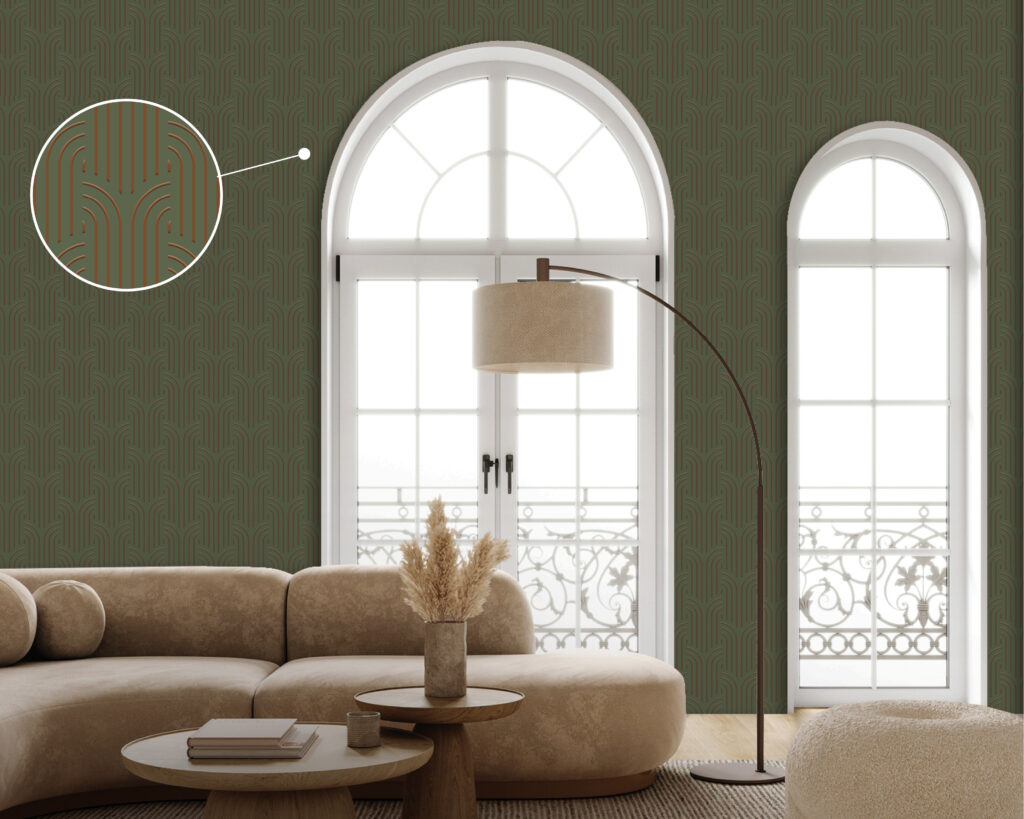
Dimensional wallcoverings, including digitally embossed surfaces like Dimense wallcoverings, allow designers to achieve the look and feel of layered materials without the complexity of traditional fabrication. Instead of building depth through multiple substrates, panels, or custom installations, designers can create tactile impact through a single wallcovering application.
These surfaces can introduce:
- A handcrafted appearance with modern consistency
- Custom designs that support the overall project concept
- Subtle relief and tactile texture
- Light-responsive finishes with visual depth across large walls
For interior designers, this creates more freedom. A wall can become architectural, expressive, and sensory without requiring multiple materials to achieve the effect.
How Textured Wallcoverings Create Immersive Interiors
Texture has the ability to transform a room in a way color alone cannot.
In hospitality interiors, textured wallcoverings can create warmth, richness, and a more memorable guest experience. In residential interiors, they add character and depth without overwhelming the design. In commercial spaces, dimensional wallcoverings help break up expansive surfaces while keeping the environment cohesive and intentional.
A textured wall becomes more than a background element. It becomes part of the experience.
This is especially valuable in spaces where designers want to create:
- Memorable first impressions
- Calming, human-centered environments
- Branded spaces with stronger visual identity
- Custom wallcovering moments that feel intentional
Texture invites people to slow down and engage with the space. It makes walls feel alive with movement, detail, and atmosphere.
Why Dimensional Wallcoverings Are an Efficient Way to Add Depth
Traditionally, creating dimensional texture in an interior required several materials, finishes, trades, or custom installation steps. That approach could add cost, complexity, and production time.
Dimensional wallcoverings offer a more efficient way to achieve depth and texture while still supporting a highly designed look.
With a single wallcovering application, designers can achieve:
- The look of layered materials
- Consistent results across large surfaces
- Reduced labor and installation complexity
- Scalable design impact for residential, hospitality, and commercial projects
- A more streamlined path from concept to completion
This makes textured design more accessible without compromising on visual impact.
It is not about replacing craftsmanship. It is about extending creative possibility through a solution that is practical, scalable, and aligned with how modern projects move.
Redefining the Role of the Wall in Modern Interiors
Walls are no longer passive elements within a space.
They are opportunities to introduce depth, emotion, identity, and story. As texture continues to take on a larger role in modern interior design, dimensional wallcoverings are helping designers move beyond flat surfaces and into more immersive environments.
At Leftbank Art, this evolution reflects the way we approach every project. From handcrafted artwork to custom dimensional wallcoverings, we collaborate with designers to create surfaces that bring spaces to life through texture, detail, and intention.
Each piece is crafted with care in our California studio, supporting a design experience rooted in artistry, innovation, and collaboration.
California Crafted.